
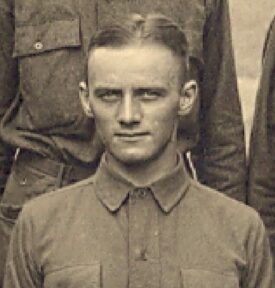
(Holmesville, New York, February 23, 1893 – Chevy Chase, Maryland, September 27, 1964).1
Oxford & Grantham ✯ Waddington ✯ South Carlton ✯ No. 45 T.S. again
Lynn Lemuel Stratton could trace both his mother’s and his father’s families back to immigrants from England who arrived in Massachusetts before 1650. On his mother’s side, James Cole and his namesake son arrived in Plymouth in 1633.2 Several generations later, William Cole left Massachusetts for Butternuts in Otsego County, New York; he was the great-grandfather of Frances Elizabeth Cole, Stratton’s mother.3 The Strattons can be traced back to a Samuel Stratton who is documented in Watertown, Massachusetts in 1647.4 A line of descendants remained in Concord and Northfield Massachusetts until Lemuel Stratton moved in about 1860 to Norwich, Chenango County, New York. There, like many of his forefathers, he made his living as a farmer. His son, Henry Reuben Stratton, married Frances (Fannie) Elizabeth Cole in 1888.5 The couple had five children; Lynn Lemuel Stratton was the second child and older of two sons.
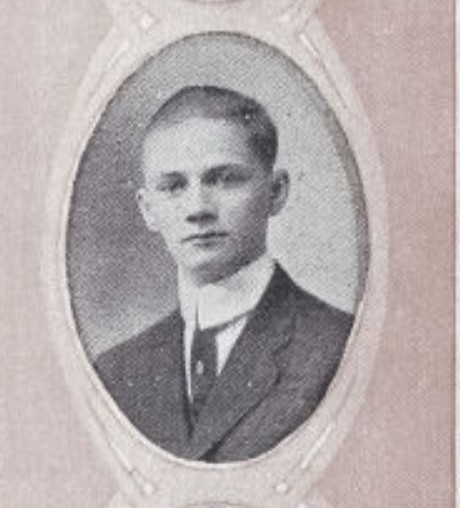
When Stratton was quite young, the family moved from their house near Holmesville, where Stratton was born, to nearby South New Berlin, where he attended school until 1906. The family moved again; his father worked for a Borden Condensed Milk Company plant in Mt. Upton and it was in Mt. Upton that Stratton attended high school. He was one of three members of the graduating class of 1909 at the Mt. Upton Union school.6 The school principal was Herbert Harry Crumb, a recent graduate of Hamilton College, and it was probably he who encouraged Stratton to attend Hamilton.7 Stratton graduated in 1913 with departmental honors in Greek and Latin8; he was elected a member of the Phi Beta Kappa Society.9 That fall he began studying classics at Harvard, receiving an A.M. in 1914.10 When he registered for the draft three years later he was teaching at the Peddie Institute, a prep school in Hightstown, New Jersey.11
Stratton enlisted on June 19, 1917, and applied for the Aviation Section of the Signal Corps; a few days later word came that he was accepted, and he set out for ground school at the Ohio State University School of Military Aeronautics.12
It was initially understood that the top graduates of Stratton’s class would go to France for advanced training. However, by the time Squadron 7 graduated from ground school on August 25, 1917, plans had changed, and he was among the eighteen men from this class at O.S.U. who, when the opportunity to train in Italy was offered, signed up for it. As his classmate Parr Hooper remarked in a letter home: “Everybody is getting very enthusiastic for Italy. All the jokes, remarks, & songs have shifted from French girls to Italian girls.”13
Soon after graduating Stratton and many of his classmates were on their way to Mineola on Long Island. The men kicked up their heels there for a time, but finally, on September 18, 1917, they and the others who would make up the 150-man strong “Italian detachment” were assembled and ferried to the west side of Manhattan to board the Carmania at a Cunard pier on the Hudson River. They sailed initially to Halifax; from there, on September 21, 1917, the Carmania set out as part of a convoy to cross the Atlantic. The men of the detachment travelled first class and had plenty of leisure, apart from Italian lessons conducted by Fiorello La Guardia, who was travelling with them. They also, once the ship entered particularly dangerous waters close to the British Isles, were assigned to submarine watch duty, which was, fortunately, uneventful.
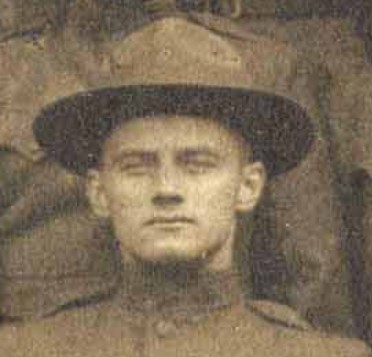
When the Carmania docked at Liverpool on October 2, 1917, the detachment members were told that they were not to continue on to Italy, but to remain in England. They travelled to Oxford that day by train. After a first night housed in various colleges, the detachment was split into two groups and assigned to Christ Church College and The Queen’s College. Stratton was apparently in the larger group at Christ Church. When the men learned that not only would there be no “sunny Italy” but also that they would be attending ground school (again) at the Royal Flying Corps’s No. 2 School of Military Aeronautics at Oxford University, there was considerable grumbling. Once instruction began, however, many of the members of what would come to be called the second Oxford detachment (a first detachment of Americans had arrived a month previously) learned to appreciate the fact that at Oxford they were taught by instructors who, unlike those in the U.S., had actual flying and combat experience. On the other hand, given their familiarity with the classroom material, the men did not have to study hard, and this freed them up for various leisure-time activities. Stratton and Hooper enjoyed sculling on the Thames and, one memorable Wednesday in late October, they visited the Bodleian together. Hooper had wide interests but was by training an engineer; he was impressed by Stratton’s classics education:
This fellow Stratton is a high-brow from Harvard, studied Greek, Sanscrit, etc. and made a fine companion on the trip this afternoon through the famous Bodleian Library. I cannot give even a hint of all the wonderful things we saw. It is steeped in history and seems to have all the original manuscripts of the Bible and the old philosophers that exist. . . . Stratton made a wonderful stroke of trying to get access to some special manuscript on Aristotle and a Dr [Arthur Ernest] Cowley took us all over the library and showed us and told us about all of its most valuable possessions. This Dr. Cowley is evidently quite some scholar as he could read Greek and Egyptian manuscripts and had a lot to do with obtaining some of the rare ones. He showed us some Egyptian writing on papyrus of 450 B.C.14
The men were eager to start flight training, but, because there were not enough openings for them at training squadrons, most of them, including Stratton, were sent at the beginning of November 1917 to a machine gunnery school, Harrowby Camp, near Grantham in Lincolnshire. There they spent two weeks learning about and practicing with the Vickers machine gun. Then, in mid-November, it was determined that there was room for fifty of the Grantham cadets at training squadrons, and Stratton was among those selected.
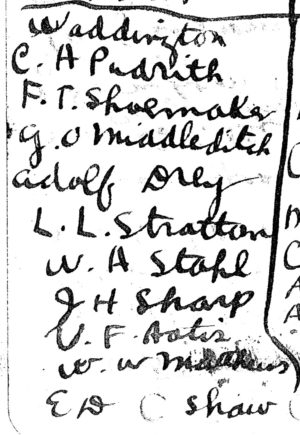
On November 19, 1917, the fifty men set out for various R.F.C. stations. Stratton, along with nine others (Adolf M. Drey, William Wyman Mathews, George Orrin Middleditch, Vincent Paul Oatis, Chester Albert Pudrith, Joseph Hiserodt Sharpe, Fred Trufant Shoemaker, Walter Andrew Stahl, and Ervin David Shaw), was sent to Waddington (just south of Lincoln and about twenty miles north of Grantham) where several R.F.C. training squadrons were located.15 The first two weeks at Waddington were apparently devoted to yet more ground instruction. At the end of his first week Stratton noted in his diary (of which only a small portion is extant) that “Sunday has same schedule as other days here” and goes on: “but I cut as usual, hanging around sheds,” evidently hoping for an opportunity to fly.
The next day, November 26, 1917, a cold and windy Monday, Stratton went up in a plane, apparently for the first time: “Capt. Rushfarth [sic] (O[fficer]C[ommanding] B Flight) takes me up in a rumpety (short horned) for a joy ride — too bumpy for instruction.” Henry Philip Rushforth was an instructor at No. 47 Training Squadron, and this was evidently the Waddington squadron to which Stratton had been assigned.16 They flew a Maurice Farman S.11, more commonly known as a Rumpty or Rumpety, a “pusher” biplane, i.e., one with the propeller behind rather than in front of the cockpit. “Flew quite low over Waddington and the valley. One feels tippy but absolutely safe in a rumpety, because the thing is all wires and the wings are not hinged, but one piece, and the engine isn’t tearing the thing all to pieces and you sit in front of the prop. But the DeH.4’s are the marvelous machines, the ones we all aim for here.”17 A propos this joy ride, Stratton noted in his diary the next day that “Capt. Rushforth always takes up the O.P. at the end of the day, for a little flip. Otherwise we never would get in one, I guess.” Stratton had been “Orderly Pupil” that day, an otherwise unexplained role, but presumably some minor leadership position among the trainee pilots.
The “marvelous” DH.4 was a fast two-seater plane used for reconnaissance and bombing, and Stratton is correct that most of the men at Waddington were expecting to fly DH.4s or the similar DH.9. For some of them, this was disappointing, as there was more glamor associated with flying single seater fighter planes (scouts). Unlike the other men with whom he was assigned to Waddington, however, Stratton was evidently early on put on an instructional path that would lead to scouts; this is reflected in his assignment to No. 47 T.S. and his initial training on Rumpties rather than DH.6s.18
Stratton took advantage of Waddington’s proximity to Lincoln to visit the city. He and Mathews had walked there on the 24th to go to dinner and the movies, and Stratton went there again, despite snow, on the following Tuesday. The next day, the day before Thanksgiving, Stratton was hoping “to persuade Lt. Waring to fly the De H.6 to Grantham to-morrow.”19 Apparently he succeeded, for he gives a short description of the Thanksgiving festivities at Grantham: “American Thanksgiving Dinner with grand display of flags at Grantham. . . . Large part of ‘Italian’ Detachment back.” There was a “Football game in P.M. English keen —think it a ‘bit rough.’. . . After dinner tables and chairs stacked & bacchanals begin.” Stratton spent the night at Grantham, sharing what was normally a reading room with Roy Olin Garver, who had come in, probably, from Stamford.
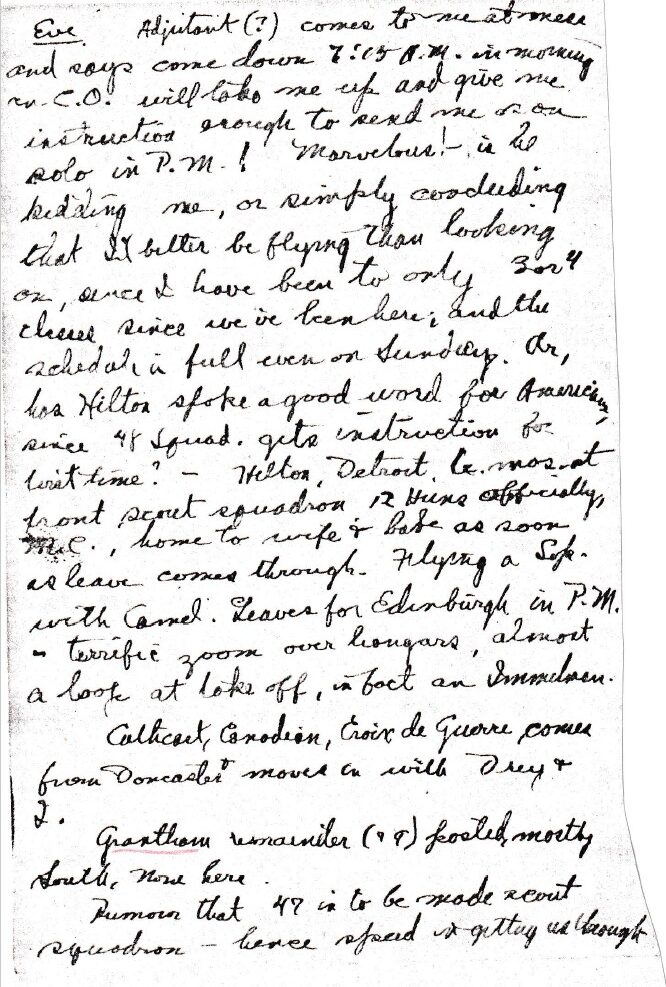
Returned to Waddington, there were more walks into Lincoln until, finally, on Tuesday, December 4, 1917, actual instruction began: “3 new instructors & new C.O. puts all kinds of pep into 47.”20 One of the new instructors, William Helmore, had given Stratton another brief joy ride in a Rumpty on the third.21 On the fourth Stratton went up in the same plane, [B]2029, for actual instruction with Cecil Henderson Keefe.22 They flew for thirty-five minutes, making three practice landings, with Stratton taking the controls some of the time: “Pretty rotten at first. Third time could keep the old rumpety bus pretty well along above the roads pointed out.”23 Stratton notes in passing in his diary that already this day his roommate, Drey, flew solo; in the evening, he records with some excitement that he was told to go to the flying field early the next morning. “C.O. will take me up and give me instruction enough to send me [up?] on solo in P.M. Marvelous!”
Early on December 5, 1917, Stratton was taken up by a Major Hunter for fifty minutes in MF S11 [B]4729, and did “it all but landings”; in the afternoon he, with the Major’s help, made three landings.24 But there was no solo flying that day, and bad weather and the departure of some of the instructors kept Stratton waiting almost two weeks to go solo, despite being ready. He notes in his diary on December 10, 1917, that “All soloing now but Middleditch (who hasn’t had any instruction to speak of) Stahl, Mathews, and I.” Finally, late on a windy afternoon, December 17, 1917, Stratton flew, first, with instructor Sharpe25 in MF S11 [B]4795, and then with Keefe in [A]2433. Keefe, despite the bumpy weather, then allowed Stratton to take up the same plane on a ten-minute solo flight: “Get away with it. Feel quite cocky when fellows at mess say it was some day to go on first solo.”26
The next day was, Stratton wrote in his diary, “the most beautiful in Eng.,” presumably referring not only to the weather, but also to the fact that he made three solo flights in MF S.11 [B]2002. The first trip lasted two hours, and his route took him north past Lincoln over Scampton and then back south to Cranwell. He was gone long enough that “Instructors all had wind up about me, thought I was lost in fog. Flying around looking for me, Sharpe was.” He went up again in the afternoon for an hour and a quarter, with a plan to fly formation with his friend, South African Harold Richard Sutton Eason. By the time they got into the air, however, there were so many Rumpties flying about that they lost one another on their way to Scampton, but did manage to fly together either side of the spire of Lincoln Cathedral, just visible above dense fog. Stratton used his third flight that day to practice landings.
Unless my arithmetic is faulty, Stratton ended the day five minutes short of five hours solo flying, but he was credited with the full five hours; he had also done the requisite fifteen landings, qualifying him to move on to the next stage of his training.
Unfortunately, the extant portion of Stratton’s diary ends on this day, December 18, 1917, the date also of his last entry in his Army Book 136 flying log. Until his log book entries recommence in February, information about him comes only from diaries of his fellow second Oxford detachment members
It appears that Stratton spent time in London over Christmas 1917: his fellow second Oxford detachment member Lloyd Ludwig noted in his diary on December 26, 1917: “Had breakfast at the Queens’ Hotel and saw Stratton there.”
South Carlton Nos. 45 & 61 T.S.
Stratton’s next posting was to South Carlton just north of Lincoln sometime in the latter part of December 1917. Murton Llewellyn Campbell, assigned to South Carlton on December 28, 1917, noted in his diary that day that he encountered Stratton already there among a group of second Oxford detachment members “all posted to the 45 Pool Squadron.” Some of these men, including Joseph Kirkbride Milnor, were soon transferred to No. 61 Squadron, also at South Carlton, and began flying Avros by the end of December. Stratton, however, appears to have been stuck in the pool squadron, presumably doing yet more ground work until mid-February 1918. He began writing entries in a new pilot’s flying log book on February 16, 1918, and examination of the summaries of hours flown indicates that he had done no flying since finishing at Waddington.
On the sixteenth, Stratton went up for the first time in an Avro, a two-seater plane designed for training; it appears, from signatures in his log book, that he was now at No. 61 T.S.27 His instructor in Avro C4399 was “Lt. [Alan] Rice-Oxley.”28 Over four days, flying with Rice Oxley in various Avros, Stratton practiced landings and learned about spins, stalls, spirals, and loops. On his second flight of the day on February 19, 1918, he and Rice Oxley went up to 8,000 feet.
Stratton did not fly the next three days. The hiatus was perhaps general among the American trainees at Waddington.29 Another second Oxford detachment member at Waddington, Don Elsworth Carlton, was killed in a crash on the nineteenth; around the same time word arrived that the preceding day two more detachment members, Harold Kidder Bulkley and Clark Brockway Nichol, had been killed at Hounslow and Stamford respectively. Carlton’s funeral was held in Lincoln on February 22, 1918.
Stratton resumed flying the next day, when Rice Oxley instructed him in fighting. They flew the same Avro D19 the next two days. On February 26, 1918, they went up together briefly in the early morning, and then Stratton flew the plane solo for twenty minutes, making two landings. In the last days of February and the first part of March, Stratton flew dual twice, once when Rice Oxley went up with him to instruct him in stunting, and then again with another instructor to work on vertical banks. Mostly, however, Stratton piled on solo hours. On March 4, 1918, he made a cross country flight to Grantham; this presumably fulfilled one of several requirements for graduating from this stage of R.F.C training. A further requirement was twenty hours of solo flying, which Stratton had by the end of the day on March 10, 1918. Twenty hours solo was also the prerequisite for being recommended for a U.S. commission.
Towards the end of February, Stratton ceased recording altitudes. However, on March 11, 1918, when he was taking part in a formation flight in an Avro 504J, C5937, he wrote in the remarks column “12,000,” presumably recording the altitude. He may thus have fulfilled yet a further requirement for graduation, his “height test.” All that remained was for him to fly an operational plane (as opposed to a plane used for training), and this he did the evening of March 18, 1918, when he flew Sopwith Pup [B]5322 for three quarters of an hour. He had also—this was not a requirement, but nevertheless useful experience—managed three forced landings.
Presumably soon after March 10, 1918, Stratton’s C.O. forwarded to U.S. officials the recommendation that Stratton be commissioned. Communications and paperwork being what they were, it wasn’t until March 30, 1918, that Pershing forwarded said recommendation to Washington. Washington delayed, for whatever reason, and Pershing send a reminder cable a month later. Finally, Stratton’s commission as a first lieutenant was confirmed in a cable from Washington dated May 13, 1918.30
It appears from Stratton’s log book that his last flight at No. 61 T.S. at Waddington was on April 12, 1918. At some point, as a reward for graduation, Stratton should have received some leave, but without letters or diary entries, there is no information on how he spent this. In passing I note that Eason, whose name appears several times in Stratton’s diary and whose training was similar, graduated March 19, 1918, the day after Stratton apparently completed the requirements. Possibly they both graduated around the same time.31
If I understand his log book correctly, Stratton did the next stage of his training, still at South Carlton, at No. 45 T.S., commanded by Shirley George Kingsley.32 Evidently 45 served not only as a pool squadron, but also as a higher training squadron. On his first flight there he flew dual for a little over an hour in an Avro with “Lt. [Theose Elwin] Tillinghast,” an American who would later join the 17th Aero Squadron and who was apparently putting in time as an instructor with the R.A.F.33 Over the next five days, Stratton flew various Sopwith Pups, on one occasion staying up for two hours and forty minutes. It may be that this was the first part of a two-day excursion from South Carlton northeast to Hull and back south to Boston, with the next day’s return journey inland and north via Quarrington and Cranwell in a different plane. But without a narrative, this is speculation based on sketchy log book entries.
The afternoon of April 23, 1918, Stratton was flying a Pup when a broken petrol pipe prompted him to make a forced landing near Lincoln. Nothing daunted, he that evening made his first flight in a Sopwith Camel ([D]8208). He continued to fly various Camels over the next days, on some days making more than one flight. On the twenty-seventh he flew a Sopwith Camel approximately seventy miles southwest to Castle Bromwich, near Birmingham, returning the same afternoon for a total flying time of three and a half hours. His landing at Birmingham may have been rough, as he needed to get a new tail skid and his rudder controls were damaged. On the return journey his pressure tank burst at or over Nottingham.34
By the end of April 1918 Stratton had flown almost seventy hours, fifty of them solo, including over seven in Sopwith Camels, and he brought the Camel total up to over ten while flying on May 2, 3, and 4, 1918. The expectation would probably have been that he would shortly be transferred to a school of aerial fighting, probably the one at Marske-by-the-Sea, as was the case with Eason.
This transfer, however, did not occur. Stratton was seriously injured in a freak accident either later in the day of the fourth or on the fifth. As he attempted to take off in Camel B4625, he crashed, and the plane turned over. As usual when there was a serious accident, a court of inquiry was held, and it was concluded that Stratton had accidently fired the plane’s machine gun; how this led to the crash is not explained.
The uncertainty regarding the date arises from the two relevant casualty cards, incident and personal, giving the accident date as May 4 and May 5, 1918, respectively.35 The last page of Stratton’s log book summarizes his flying for the “period ending 4–5–18,” i.e., May 4, 1918.
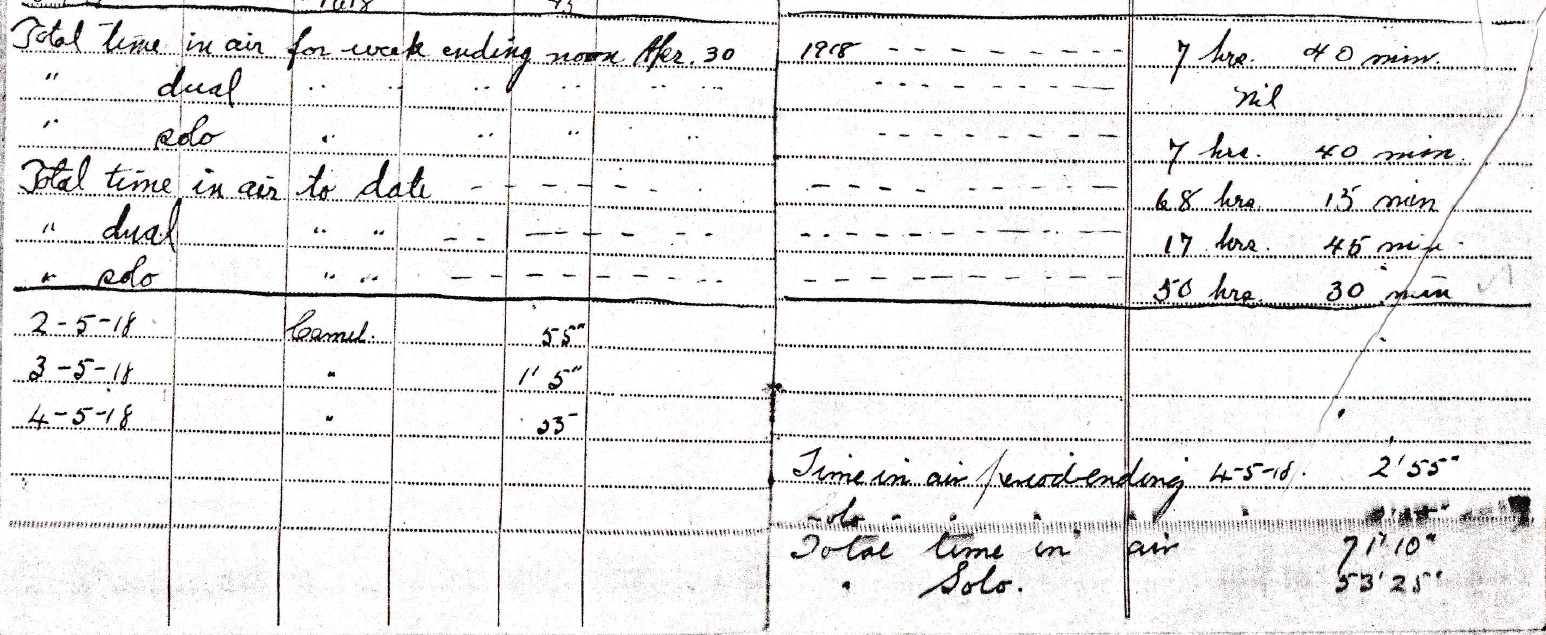
This would at first blush suggest that the one flight recorded for May 4, 1918, was the first, only, and last of that day. However, the close of day for records in the R.A.F. was not typically at midnight on a given day, but rather at an hour specified by the authorities. Some of Stratton’s earlier summaries specify “time in air for week ending noon [date].” The information in the log book, then, does not preclude Stratton’s having updated his log book before making a second, and calamitous, flight on May 4, 1918. As regards the divergent dates on the casualty cards: the incident card, with the date May 4, 1918, for the incident, records that the information was received at Lincoln the next day; I suspect that this date, May 5, 1918, was then taken over by the subsequently generated person casualty card.
Stratton was initially admitted to 4th Northern General Hospital in Lincoln. A medical card indicates that he had sustained a fracture of the left frontal bone and two wounds to the face in the crash (the card, incidentally, confirms May 4, 1918, as the crash date).35a He was transferred, probably in early July, to King’s Lancashire Military Convalescent Hospital in Blackpool. On September 6, 1918, he left British care for the American Red Cross Hospital No. 4 at Mossley Hill, Liverpool. Then on October 16, 1918, he moved to the American Red Cross Convalescent Hospital No. 101, located at Ford Manor, the country home of Herbert Henry Spender-Clay and his wife, the former Pauline Astor, near Lingfield in Surrey.36 There he probably encountered second Oxford detachment member Francis Kinloch Read, also wounded, who described the hospital as “a wonderful place.”37
Stratton and Read, and a number of other second Oxford detachment members who were in England, went to Liverpool shortly after the armistice to book passage home, as did Stratton’s instructor from South Carlton, Tillinghast. On November 25, 1918, they boarded the Mauretania and set sail. The ship arrived at New York on December 2, 1918, to much publicity: the Mauretania was the first ship carrying American soldiers and aviators from Europe to arrive back in the U.S. after the war.
Initially Stratton returned to New York but eventually settled in the Washington, D.C., area where he was a specialist in tax law.38
mrsmcq September 16, 2026
Notes
(For complete bibliographic entries, please consult the list of works and web pages cited.)
1 For Stratton’s place and date of birth, see Ancestry.com, U.S., World War I Draft Registration Cards, 1917–1918, record for Lynn Lemuel Stratton. His place and date of death are taken from “Retired Hill Employe Lynn L. Stratton, Helped Write IRS Code of 1939.” The photo is a detail from the photo taken of Squadron 7 at Ohio State University School of Military Aeronautics in August 1917.
2 See Cole, The Descendants of James Cole of Plymouth, 1633, which carries the genealogy down to William Cole (368 on p. 56).
3 See documents available at Ancestry.com.
4 See, Stratton, A Book of Strattons, vol. 1, p. 157; vol. 2, p. 17.
5 See documents available at Ancestry.com.
6 “Mt. Upton.”
7 Most of the information about Stratton’s childhood and youth are taken from a memo written by him and retained by his grandson, Richard Stratton, who generously shared it with me.
8 Hamilton College Catalogue One Hundred and Second Year 1913–1914, p. 79.
9 “Hamilton College.”
10 Harvard University, Harvard University Catalogue 1913—14, p. 144; Harvard University, Quinquennial catalogue of the officers and graduates 1636-1930, p. 724.
11 See above-cited draft registration.
12 Information taken from an account of his military service drawn up by Stratton and retained by his grandson, Richard Stratton, who kindly shared it with me. And see the entry for Stratton on p. 915 of Mead, ed., Harvard’s Military Record in the World War, as well as “To Accept Five for Sky Service.”
13 Letter from Hooper to his father (unpublished, in my possession) dated August 18, 1917.
14 Hooper, Somewhere in France, letter of October 31, 1917.
15 For the names of the men sent to training squadrons in mid-November, see Foss, diary entry for November 15, 1917.
16 See The National Archives (United Kingdom), Royal Air Force officers’ service records 1918–1919, record for Henry Philip Rushforth.
17 Quotations are taken from Stratton’s diary.
18 See Stratton, Army Book 136, for his log of these early flights.
19 This was probably William Wallace Waring. See mention of Waring in Stratton’s diary entry of December 10, 1917, cf. Oatis’s mention of the American Lt. Waring in his letter of December 11, 1917.
20 Stratton, diary for this day.
21 That the Helmore in Stratton’s Army Book 136 was William Helmore, and not another man of the same surname, is an educated guess. There appears to be no R.A.F. service record (Air 76) record for William Helmore. For information on him, see Barrass, “Air Commodore W Helmore.”
22 Stratton, Army Book 136. Like many pilots, Stratton omitted the leading letter in some airplane serial numbers. For the prefix, see Robertson, British Military Aircraft Serials 1878–1987. On Keefe and his presence at No. 47 T.S., see The National Archives (United Kingdom), Royal Air Force officers’ service records 1918–1919, record for C. H. Keefe.
23 Stratton, diary for this day.
24 See Stratton’s diary and his Army Book 136. According to a signature in the latter, the C.O. of No. 47 T.S. at this time was O[scar] M[ontague] Guest, so it was apparently not the C.O. who flew with him. The Major was probably Henry John Francis Hunter; see “Captain, Major Henry John Francis Hunter,” which indicates he was in England during this period.
25 This was perhaps William Weston Sharpe; see The National Archives (United Kingdom), Royal Air Force officers’ service records 1918–1919, record for William Weston Sharpe.
26 See Stratton’s Army Book 136 and his diary.
27 I have not been able to decipher the signature itself, but the stamp used appears to read “61 T.S.”
28 See The National Archives (United Kingdom), Royal Air Force officers’ service records 1918–1919, record for Alan Rice Oxley. Stratton’s log book entry for February 19, 1918, reads “A. Rice-Oxley,” presumably to distinguish his instructor from his brother, George Kenneth Rice Oxley, who may have been an instructor at 45 T.S., and his half-brother, Frederick William Hall Oxley, whom Stratton may have known at Waddington. See The National Archives (United Kingdom), Royal Air Force officers’ service records 1918–1919, records for George Kenneth Rice Oxley, Frederick William Hall Oxley, and F. W. Rice [sic] Oxley.
29 Cf. Oatis’s pilot’s flying log book, which also records no flying on February 20–22, 1918.
30 Cablegrams 823-S, 1029-S, and 1303-R.
31 See The National Archives (United Kingdom), Royal Air Force officers’ service records 1918–1919, Record for Harold Richard Sutton Eason; and “Eason, H.R.S. (Harold Richard Sutton.”
32 See the relevant signature in Stratton’s log book and The National Archives (United Kingdom), Royal Air Force officers’ service records 1918–1919, records for Shirley George Kingsley.
33 The Royal Flying Corps became the Royal Air Force on April 1, 1918. Tillinghast had arrived in Liverpool in early December 1917. His R.A.F. service record puts him at No. 45 T.S. prior to his assignment to the 17th Aero in June 1918. See War Department, Office of the Quartermaster General, Army Transport Service, Lists of Incoming Passengers, 1917 – 1938, Passenger list of officers disembarked from S.S. Carpathia; and The National Archives (United Kingdom), Royal Air Force officers’ service records 1918–1919, record for Theose Elwin Tillinghast.
34 Stratton mistakenly gives the plane’s serial number as D9841—the number for a DH.9. It should almost certainly have been D9541; see the entry for this Camel at Pentland, Royal Flying Corps, which indicates that D9541 was at South Carlton.
35 See the two cards for “Stratton, L.L. (Lynn Lemuel).”
35a I am grateful to the staff of the RAF Museum London for a scan of Stratton’s medical card.
36 These hospitals with approximate dates are listed in a typed memo by Stratton from 1958 based on a memo he made in 1919. I am grateful to his grandson, Richard Stratton, for supplying a copy of it. The date of his transfer to Mossley Hill comes from his medical card; the date of his transfer to the last hospital comes from his (person) casualty card.
37 Read, letter of October 7, 1918. Read dated this letter “Monday Aug. 7th, 1918,” but content and context make clear that it was written on October 7, 1918
38 “Retired Hill Employe Lynn L. Stratton, Helped Write IRS Code of 1939.”